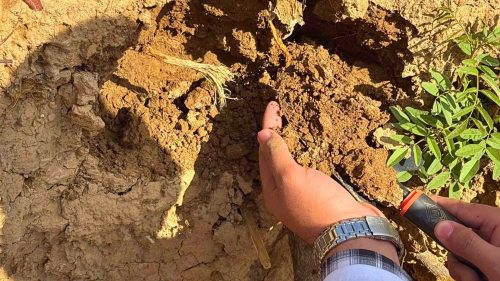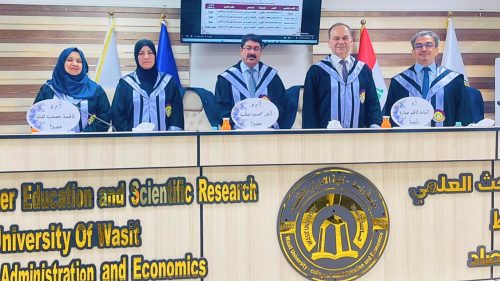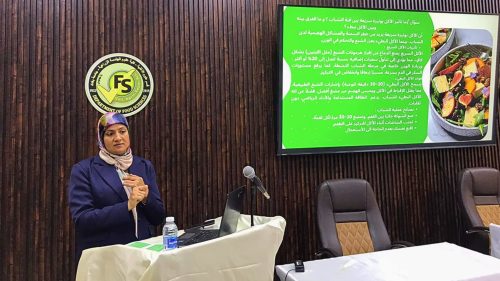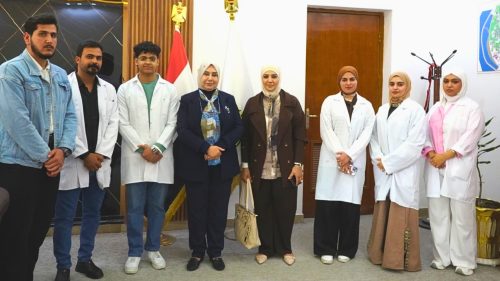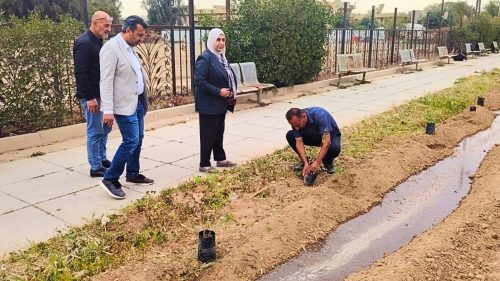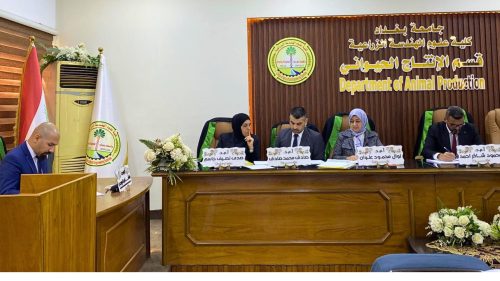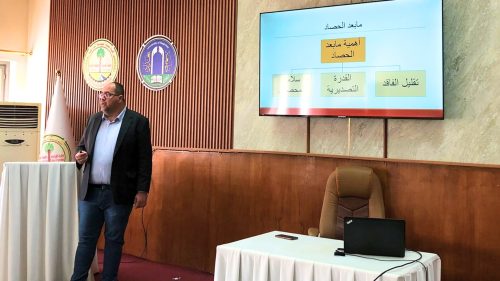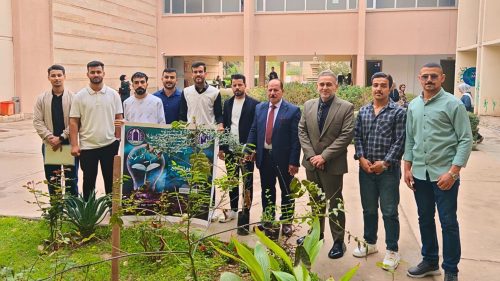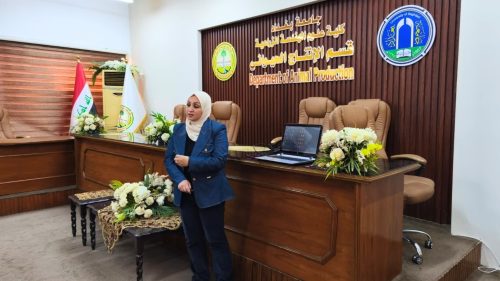
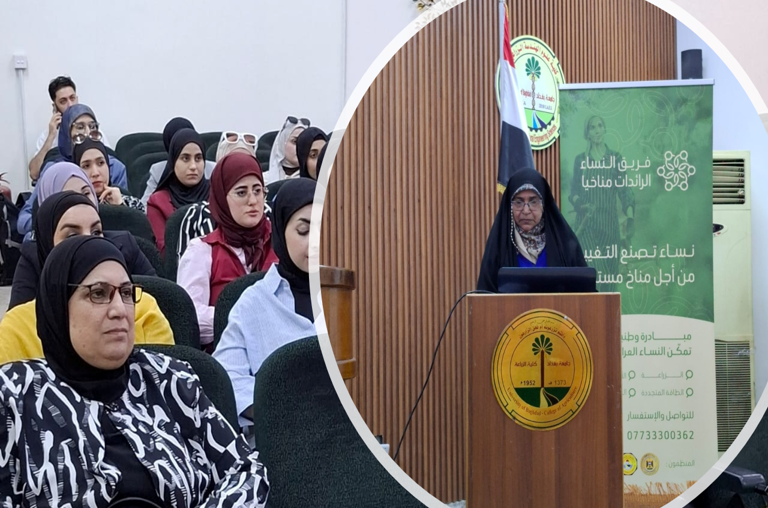
The Women’s Affairs Unit at the College of Agricultural Engineering Sciences, in collaboration with the Department of Plant Protection at the University of Baghdad, organized a workshop on the economic importance of honeybee rearing and establishing apiaries.
The workshop covered a comprehensive range of theoretical and practical topics, including an introduction to honeybees, their economic and environmental significance (pollination), other bee products, apiary establishment, site selection, and bee management and care practices.
The workshop aimed to equip participants with essential skills, including:
-
Acquiring basic skills: Providing participants with the knowledge and practical experience needed to handle bees and manage hives correctly and efficiently.
-
Establishing a profitable project: Enabling trainees to plan and establish their own apiaries, providing preliminary feasibility studies and business plans (marketing and production) to achieve additional or primary income.
-
Increasing productivity: Teaching sustainable and proper beekeeping practices to improve the quantity and quality of honey and other bee products.
-
Bee health: Raising awareness about the importance of bee health and methods to prevent diseases and pests that threaten colonies.
-
Environmental and economic awareness: Highlighting the vital role of bees in pollination, contributing to food security, and supporting biodiversity.
You May Also Like