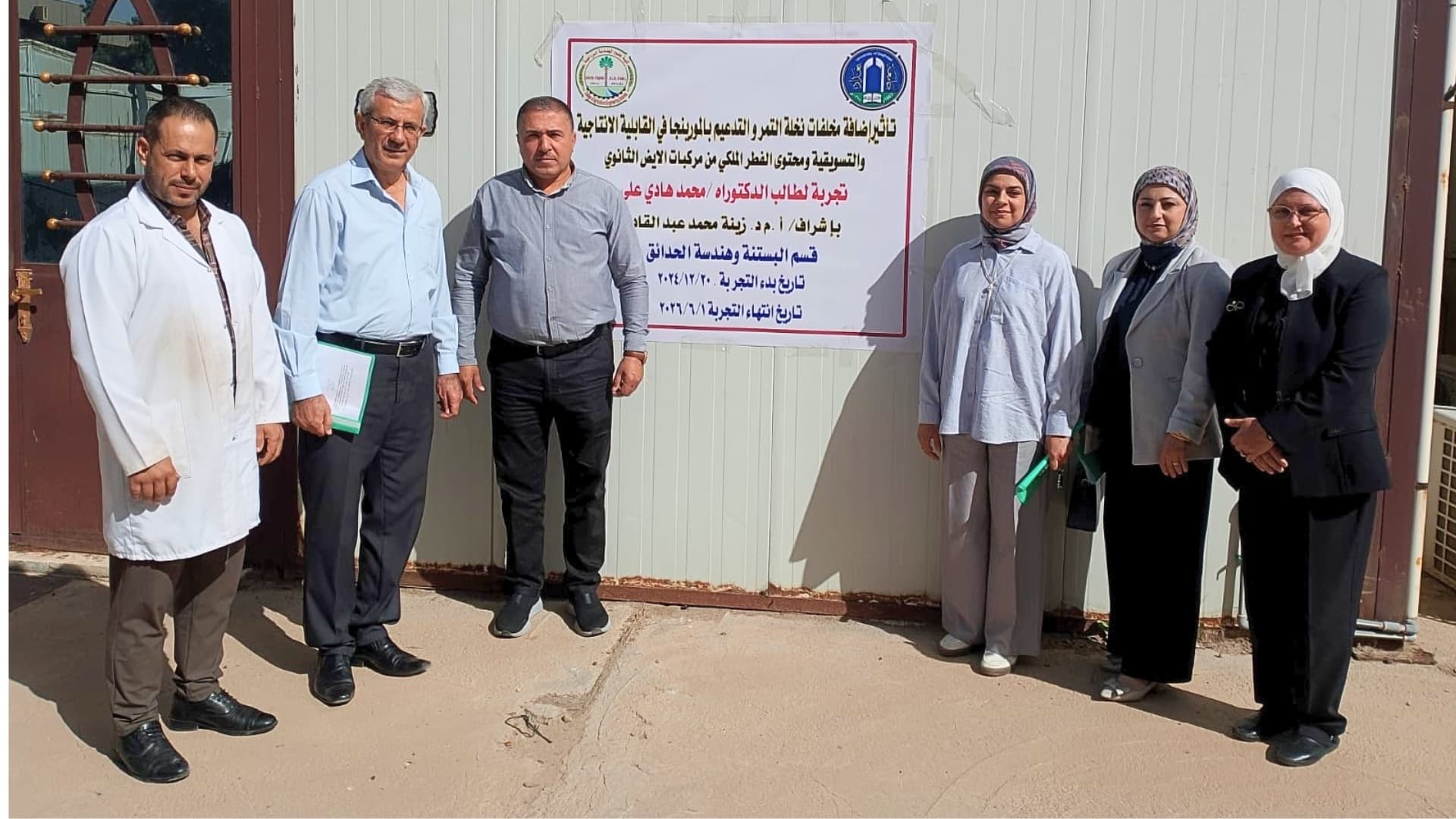
A specialized inspection committee responsible for monitoring graduate research projects in the Department of Horticulture and Landscape Gardening Engineering, College of Agricultural Engineering Sciences, conducted a field visit to review a doctoral research project entitled:
“Effect of Adding Date Palm Residues and Fortification with Moringa on the Productive and Marketing Potential and Secondary Metabolite Content of King Oyster Mushroom.”
The research is being carried out by PhD student Mohammed Hadi Ali under the supervision of Asst. Prof. Dr. Zeina Mohammed Abdul Qader.
During the visit, the committee reviewed the progress of the experiment and evaluated the scientific and practical level of implementation. The project focuses on examining the effects of specific treatments on improving growth characteristics, increasing productivity, and enhancing product quality in ways that support the marketability of the crop.
The visit aimed to assess the scientific and applied standards of the productive experiment, ensure the accurate implementation of research treatments according to the approved experimental design, and verify the sound collection and statistical analysis of data. It also provided an opportunity to guide the student toward improving the quality of the findings and strengthening their relevance to practical and productive applications.
The committee recommended the continuation of regular measurements to ensure the precision of results, alongside careful data documentation and scientifically rigorous analysis. It also stressed the importance of emphasizing applied outcomes that can contribute to supporting the agricultural sector and promoting local production.
In addition, the committee praised the efforts of both the student and the supervisor, commending the well-organized execution of the experiment and the scientific approach followed throughout the research stages.
At the end of the visit, the committee highlighted the importance of such studies in advancing the productive aspects of edible mushroom cultivation, increasing their content of bioactive compounds, and extending their shelf life and marketing potential. The project also contributes to the achievement of the Sustainable Development Goals, particularly in supporting sustainable agricultural development and food quality. The committee concluded by wishing the research team continued success in their academic endeavors.


