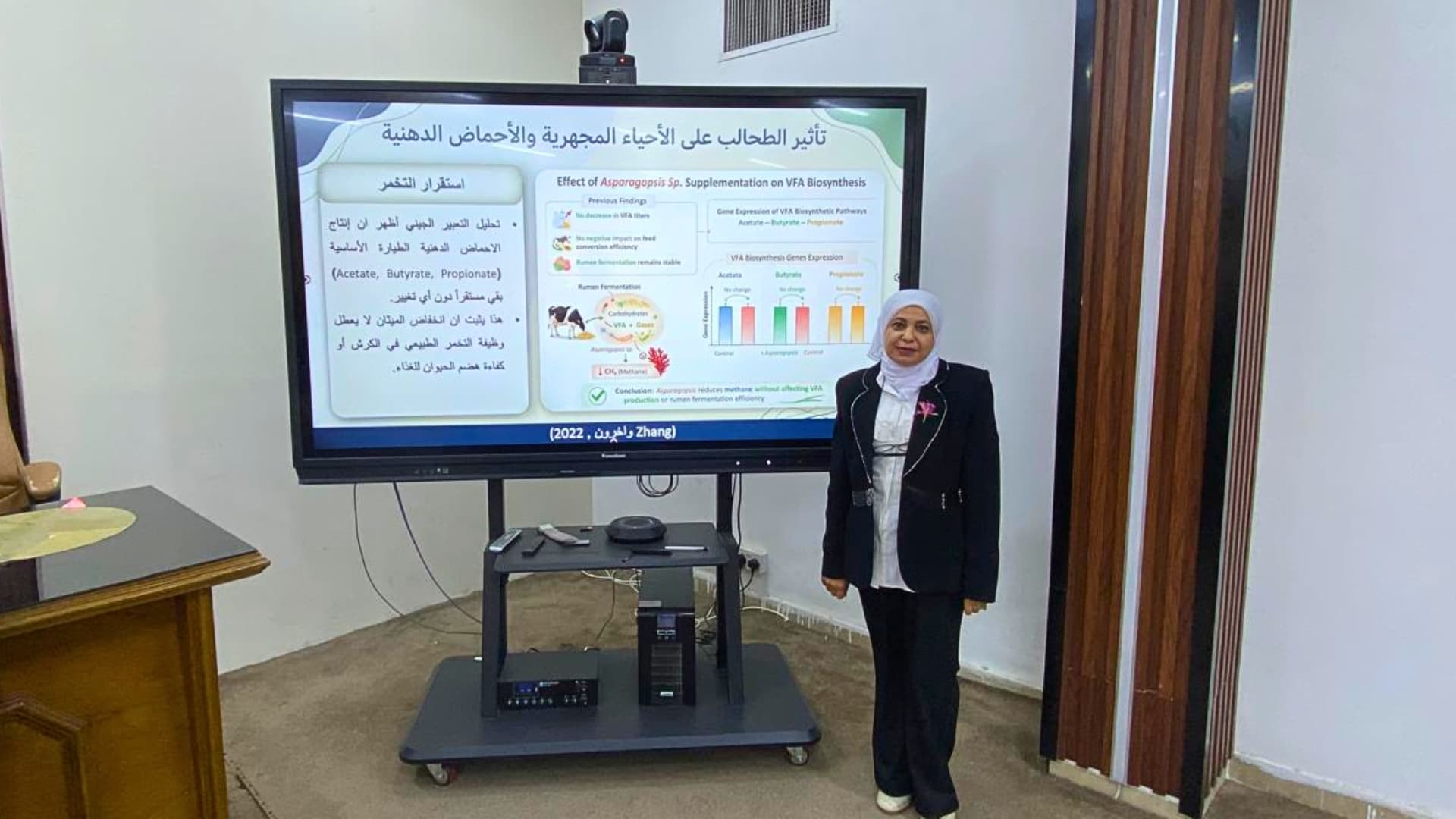
The Department of Animal Production, College of Agricultural Engineering Sciences, University of Baghdad, organized a seminar entitled “The Use of Asparagopsis taxiformis as a Feed Additive to Reduce Methane Emissions in Ruminants.” The seminar was delivered by Master’s student Amal Hadi Khalaf Saleh, in the presence of the Head of the Department, Professor Dr. Hussam Jassim Bananah, along with a number of faculty members and graduate students.
The seminar addressed the environmental issue of global warming, highlighting that cattle and sheep are major sources of methane (CH₄) emissions produced during ruminal fermentation. The livestock sector contributes approximately 14.5% of total global greenhouse gas emissions, with enteric methane accounting for about 30% of these emissions. The seminar also discussed an important economic aspect, noting that methane production represents a loss of 2–12% of dietary energy, which could otherwise be utilized by the animal, thereby negatively affecting performance and productivity.
The seminar aimed to emphasize the need for effective, sustainable, and environmentally friendly nutritional strategies to reduce gaseous emissions without adversely affecting animal performance.


