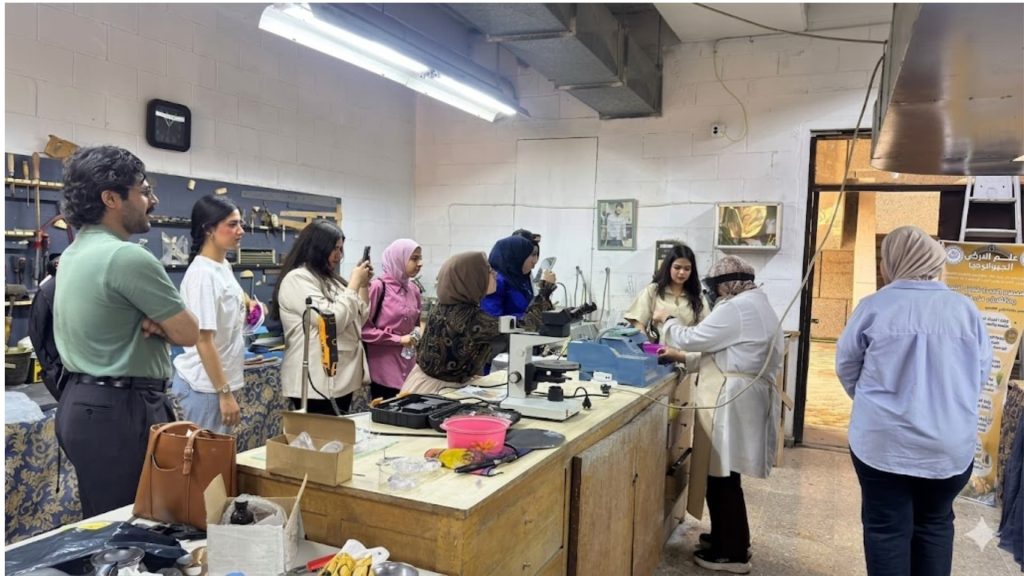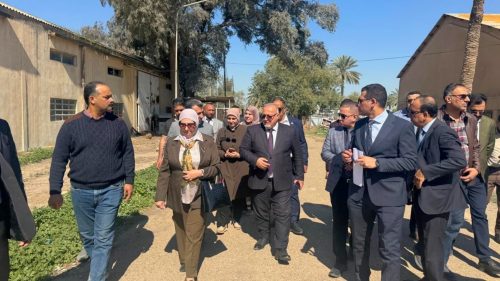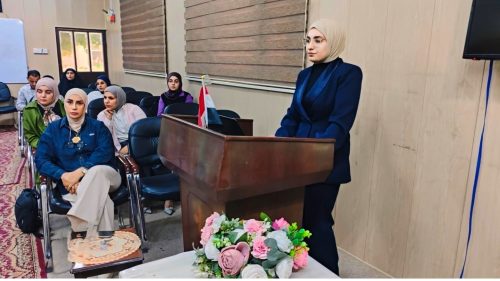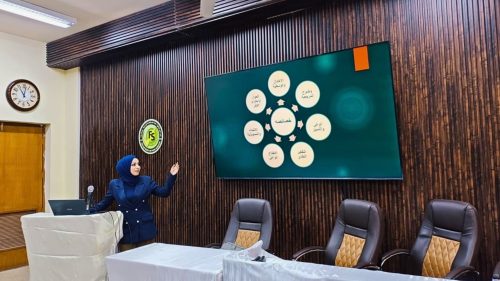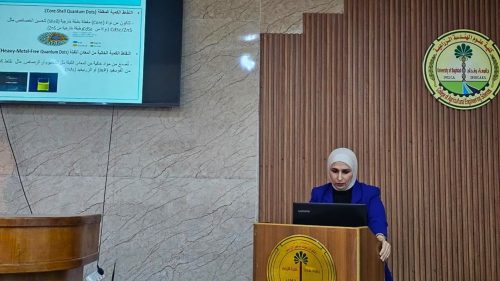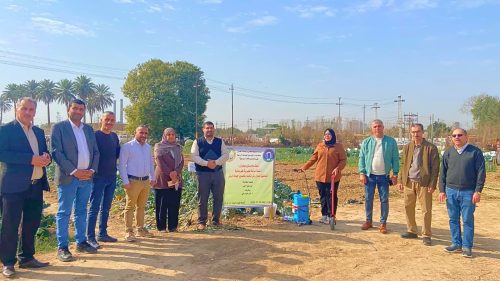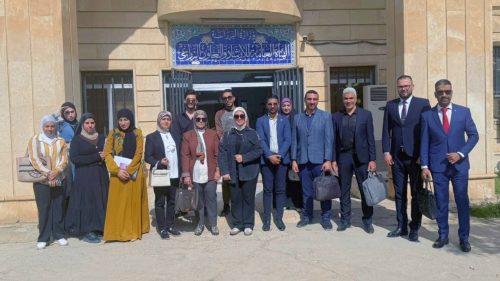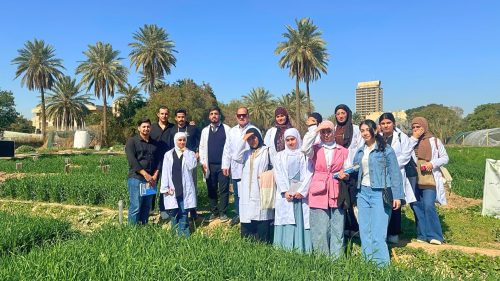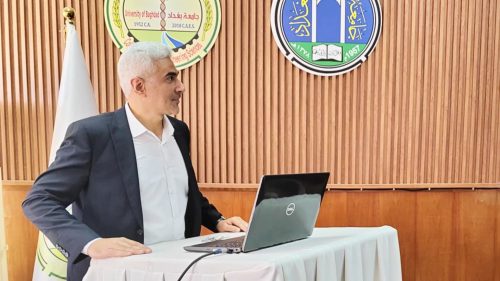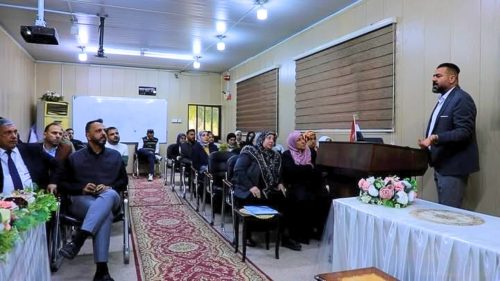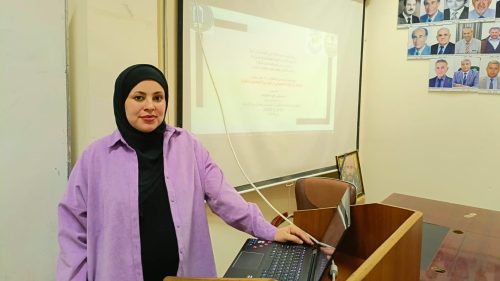
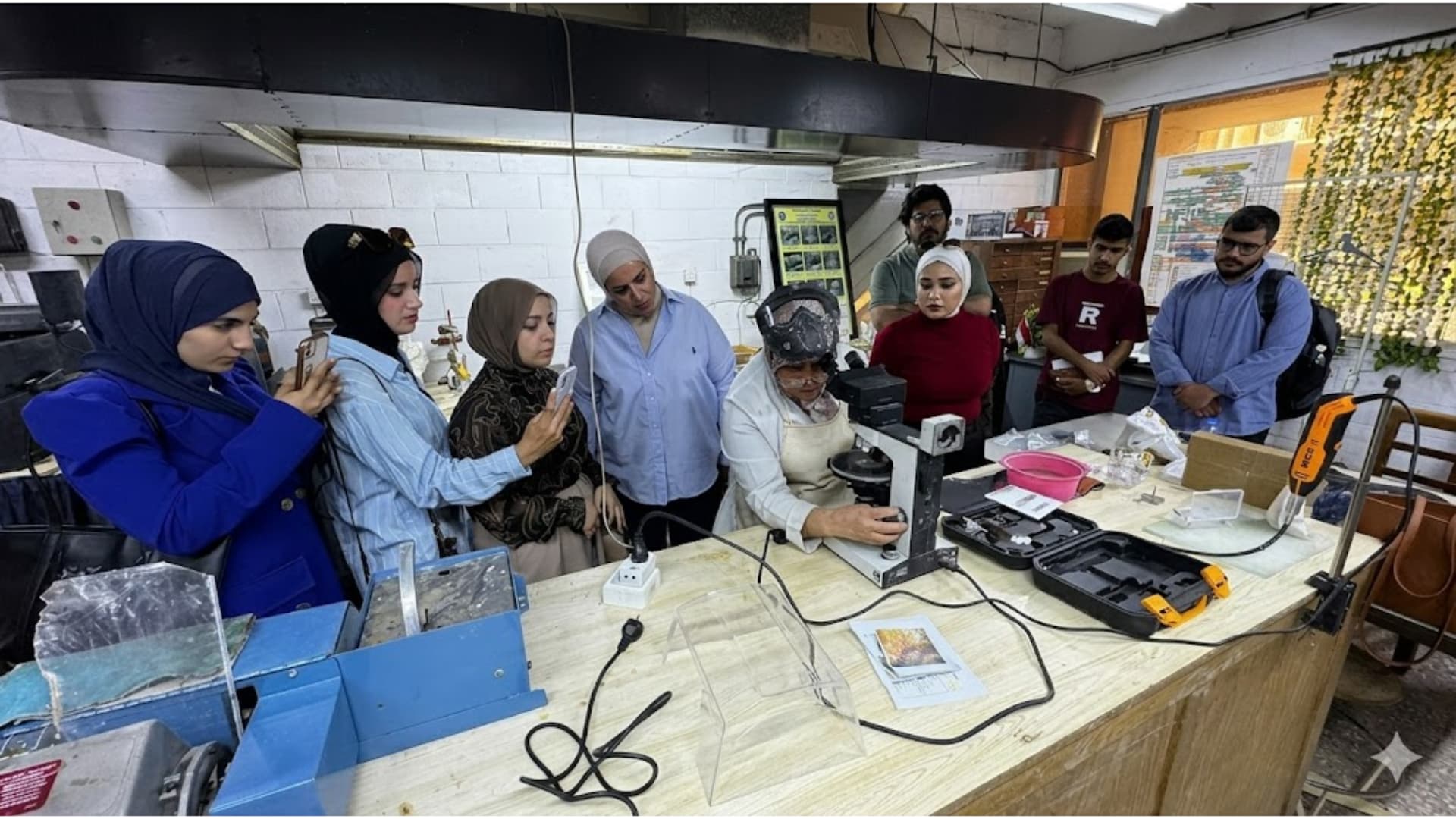
The Department of Desertification Combat, in cooperation with the Continuing Education Unit, organized a training course entitled “How to Achieve Sustainable Environmental Development.” The lectures were delivered by Assistant Professor Dr. Maha Ibrahim Saleh (Institute of Genetic Engineering), Lecturer Dr. Sajaa Jawad Shnishil (Department of Desertification Combat), Lecturer Dr. Safaa Hamid Fadil, and Assistant Lecturer Shmoos Abdul Sattar Jabbar (College of Engineering – Department of Environmental Engineering), with the attendance of a number of staff members and students.
The course addressed several scientific topics, أبرزها the role of plant tissue culture in reducing environmental pollution and increasing productivity, in addition to highlighting the contribution of modern technologies to environmental sustainability.
The course aimed to promote the use of advanced technologies in crop production and to enhance food security, supporting key Sustainable Development Goals, particularly Goal 2 (Zero Hunger), Goal 13 (Climate Action), and Goal 15 (Life on Land).
At the conclusion of the course, emphasis was placed on the importance of continuing such scientific activities that contribute to skill development and raise environmental awareness, with best wishes for all participants in their academic careers.