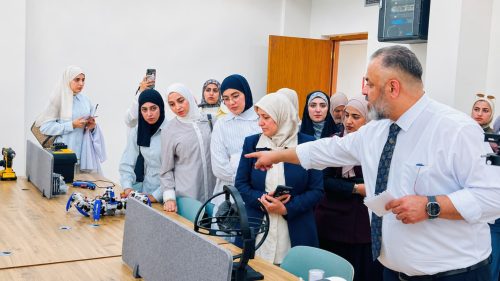
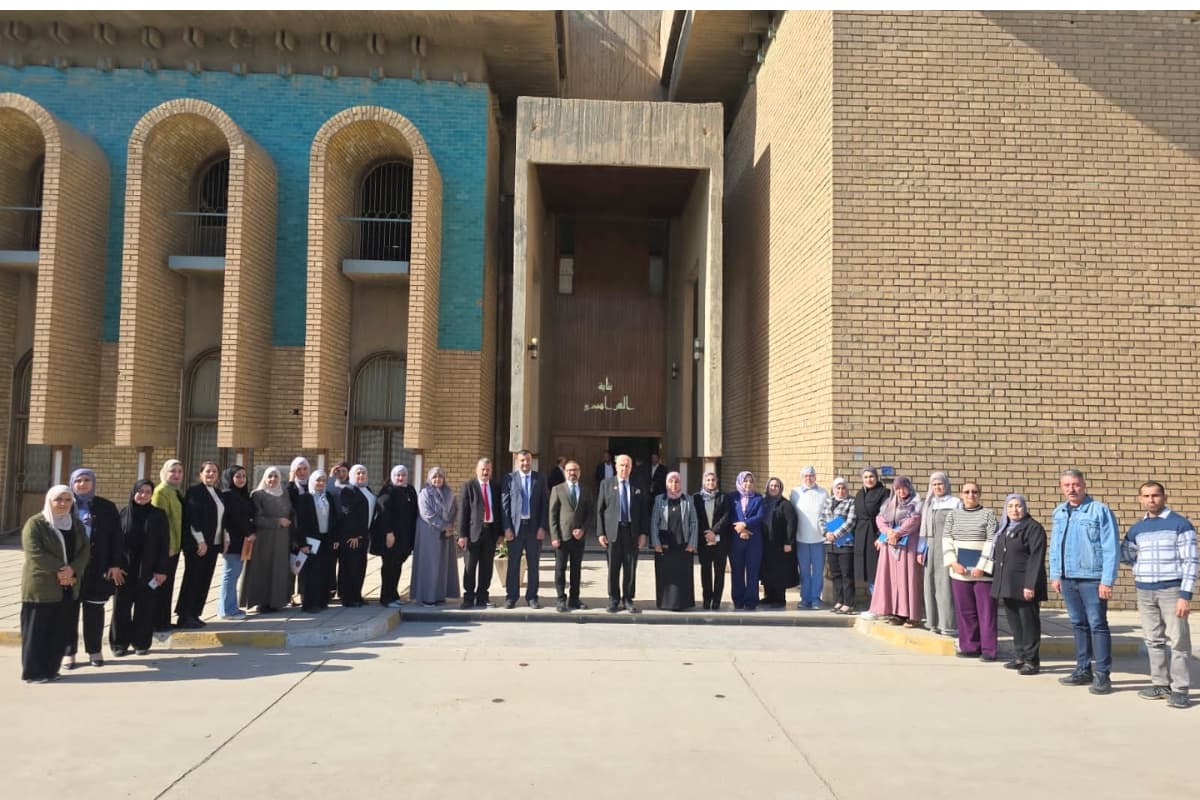
Several faculty members from the Plant Protection Department at the University of Baghdad’s College of Agricultural Engineering Sciences recently participated as instructors in a specialized training course at the Iraqi Academy of Sciences.
The four-day program, titled “The Use of Artificial Intelligence in Combating Plant Diseases,” was held at the Prof. Dr. Mohammed Hussein Al-Yassin Hall. The participating faculty included:
-
Assoc. Prof. Dr. Bushra Subeer Abd Al-Sada
-
Assoc. Prof. Dr. Alaa Khudair Hassan
-
Assoc. Prof. Dr. Iman Khalil Abd Al-Karim
-
Lecturer Ammar Amjad Ayesh
-
Lecturer Mohammed Mahmoud Suleiman
Course Objectives and Impact
The training focused on utilizing Artificial Intelligence to analyze plant health and diagnose diseases. By leveraging AI-driven data, the program aims to solve agricultural challenges and ensure the production of high-quality, healthy crops. This collaboration fulfills UN Sustainable Development Goal 17 (Partnerships for the Goals).
At the conclusion of the event, the President of the Academy presented the faculty with certificates of appreciation and formal letters of thanks in recognition of their scientific contributions.
Congratulations to our distinguished faculty for their ongoing commitment to scientific excellence.