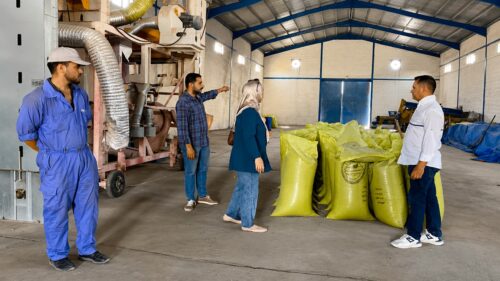
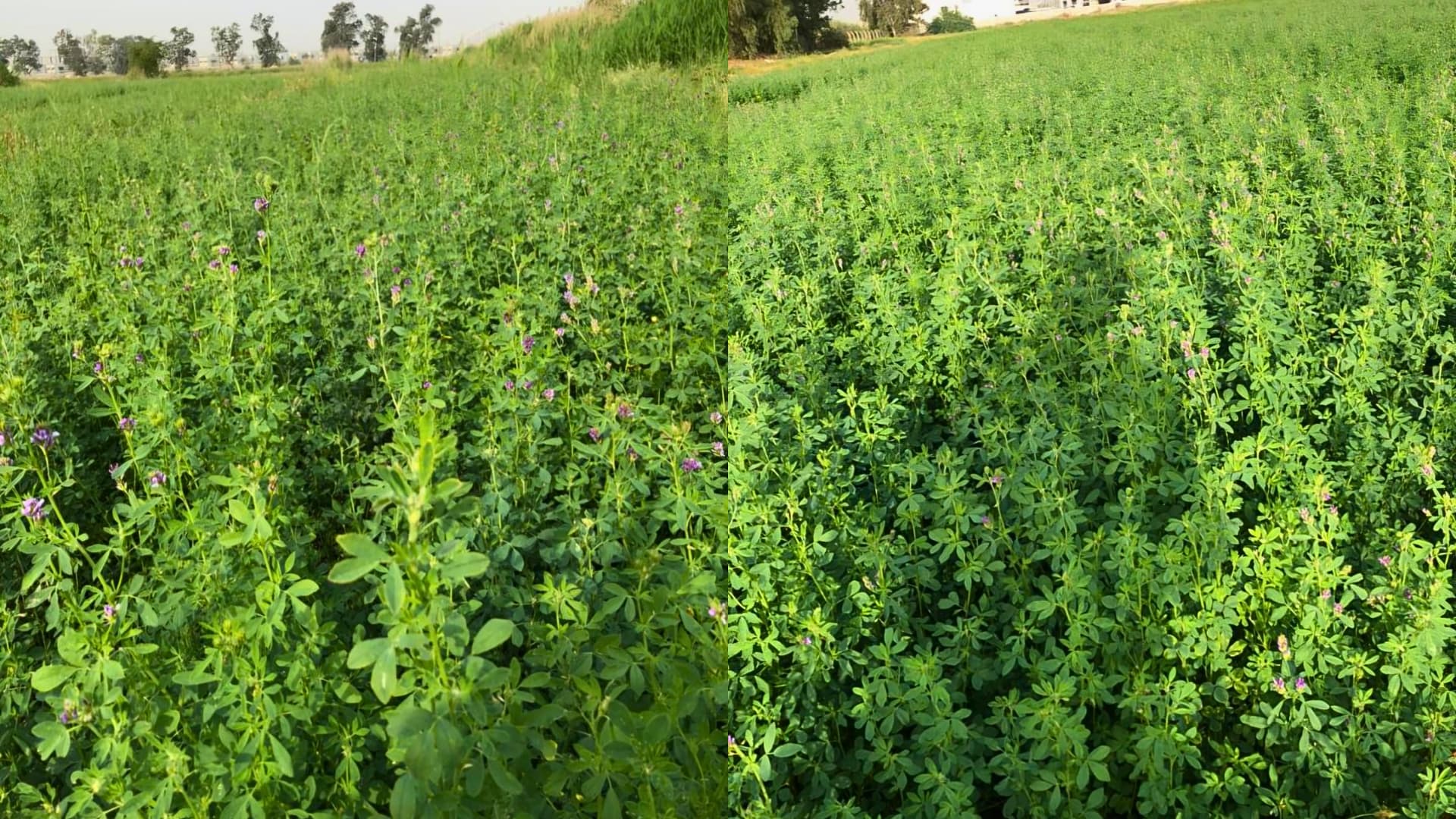
Within the directions of the College of Agricultural Engineering Sciences – University of Baghdad to support sustainable agricultural practices and strengthen feed security, a research project was carried out in the Abu Ghraib research fields affiliated with the college under the supervision of Prof. Emeritus Dr. Hameed Khalaf Khraibet from the Department of Field Crops. The project focused on cultivating a certified variety of alfalfa, widely known as the “green gold.”
This variety is considered one of the best alfalfa cultivars grown in Iraq. It is characterized by vigorous plant growth and a higher leaf-to-stem ratio, which positively reflects on the yield and the nutritional quality of the green forage.
The plant is also distinguished as a perennial crop capable of providing sustainable vegetation cover, with a productive lifespan of approximately five years. This contributes to supporting agricultural sustainability and reducing the need for frequent replanting.
This project is part of ongoing research efforts aimed at developing forage production and achieving optimal utilization of agricultural resources, in line with the principles of environmental sustainability and improving agricultural production efficiency.