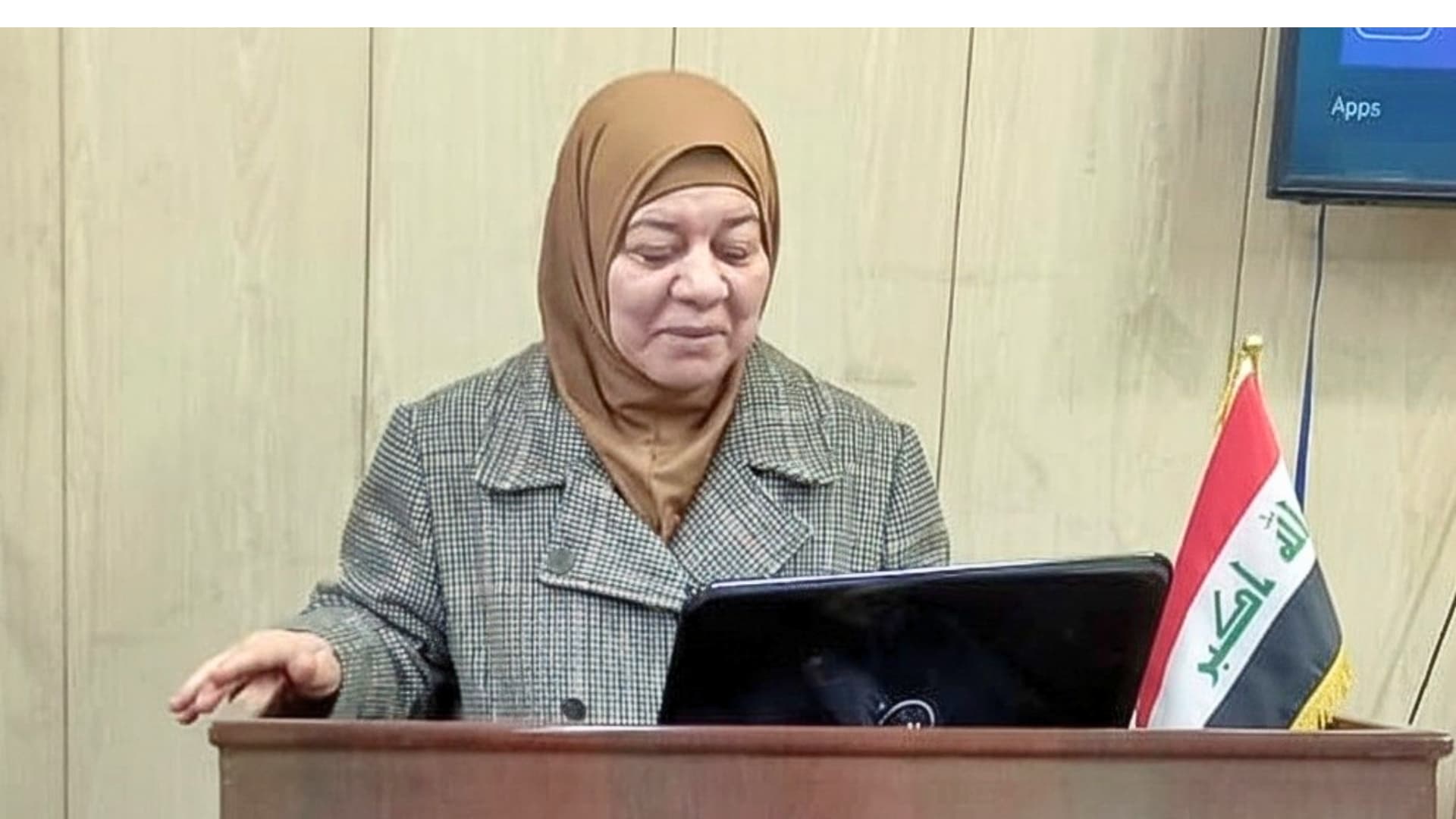
The Department of Soil Sciences and Water Resources, in cooperation with the Continuing Education Unit, organized a specialized scientific training course titled “The Role of Soil Microorganisms in Improving Soil Fertility.” The course was held under the patronage of the Dean of the College of Agricultural Engineering Sciences, Prof. Dr. Ameera Mohammed Saleh, and under the supervision of the Head of the Department, Assoc. Prof. Dr. Ahmed Abdulwahab Abdulridha, with the attendance of several faculty members from the department.
The course aimed to highlight the scientific foundations of the role of soil microorganisms and their behavior in enhancing soil fertility and increasing agricultural productivity. It included a valuable lecture delivered by Assistant Lecturer Wijdan Talib Kadhim.
The course concluded with several recommendations, most notably the sustainable enhancement of organic matter, proper management of soil salinity in affected areas, conducting periodic soil testing, and reducing the random use of pesticides to ensure sustainability.
This course was organized in support of the Sustainable Development Goals, particularly Goal 4: Quality Education.