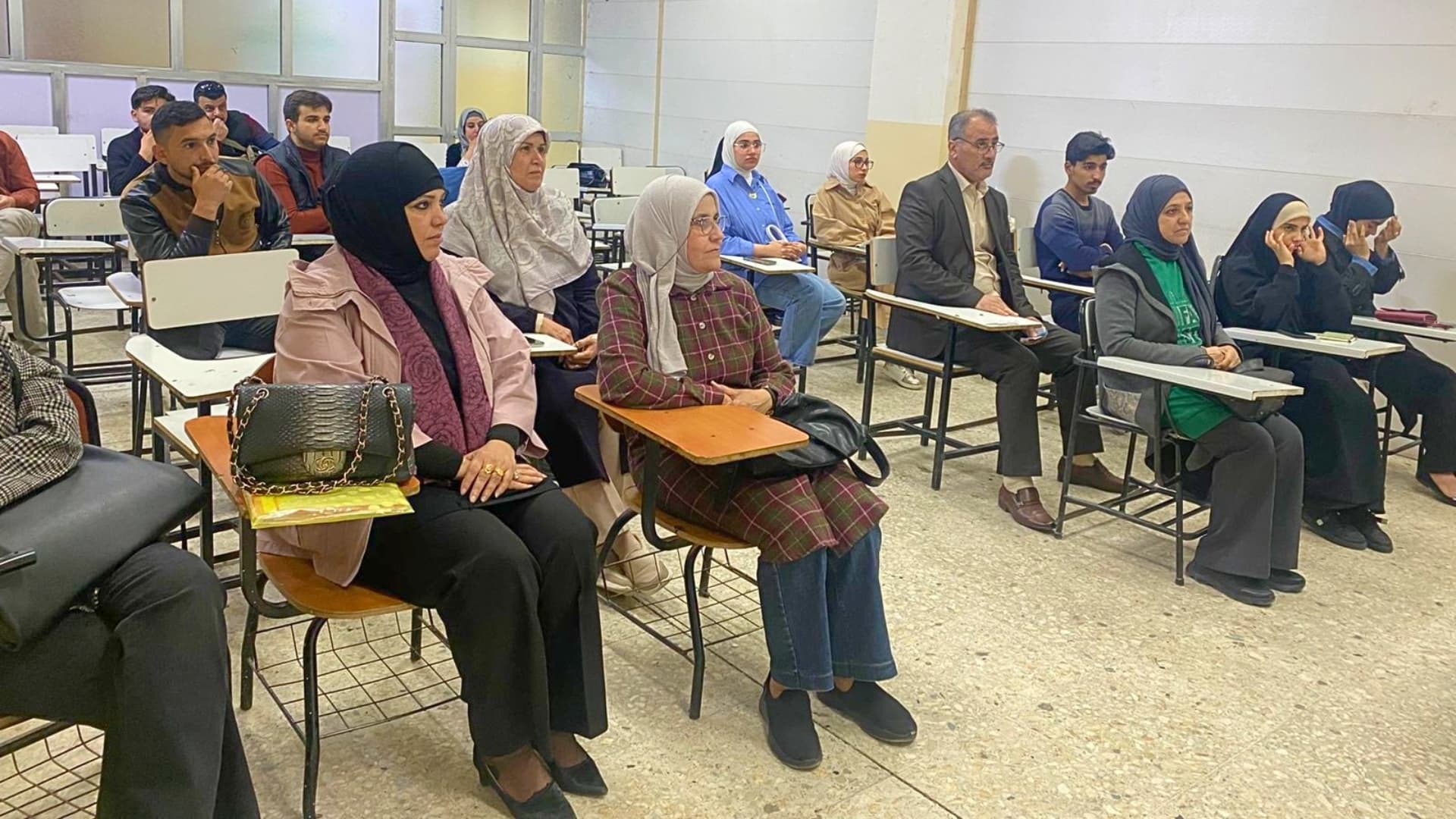
The Department of Agricultural Machines and Equipment organized a workshop titled “Sustainable Construction Engineering Through Recycling Agricultural Waste and Reducing the Carbon Footprint.” The workshop was delivered by Lecturer Maryam Mohammed Khalaf, with the attendance of several faculty members and students from the department.
The workshop addressed the most important types of agricultural waste, including rice straw ash, wheat straw ash, sugarcane bagasse ash, corn residues, and corn husks, and their use in improving the properties of green concrete. These materials contribute to producing lightweight concrete with improved resistance to chemical corrosion and reduced water permeability. In addition, they can be used to enhance subgrade soils beneath structural building foundations.
The workshop aimed to promote the use of raw materials derived from recycled waste to reduce production costs and environmental pollution caused by burning agricultural residues. It also highlighted the role of these practices in reducing carbon dioxide emissions associated with fertilizer production, thereby lowering the overall carbon footprint.
The workshop recommended giving greater attention to recycling agricultural waste as a means to reduce environmental pollution and production costs. This approach also supports the Sustainable Development Goals, particularly the goal of affordable and clean energy.


