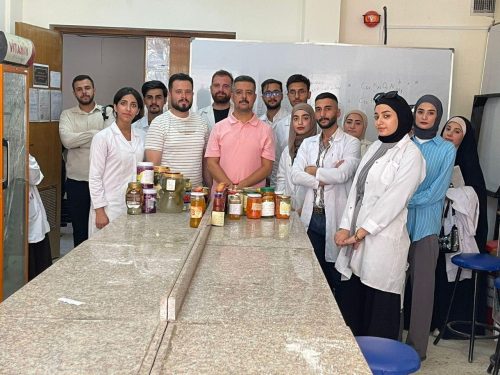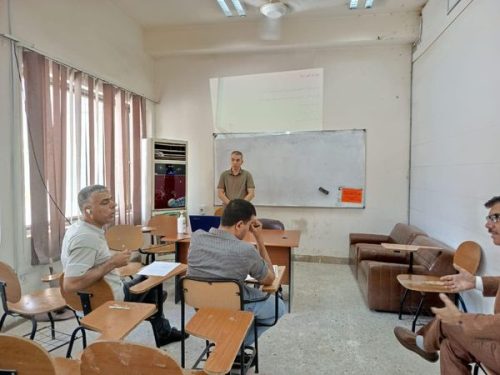
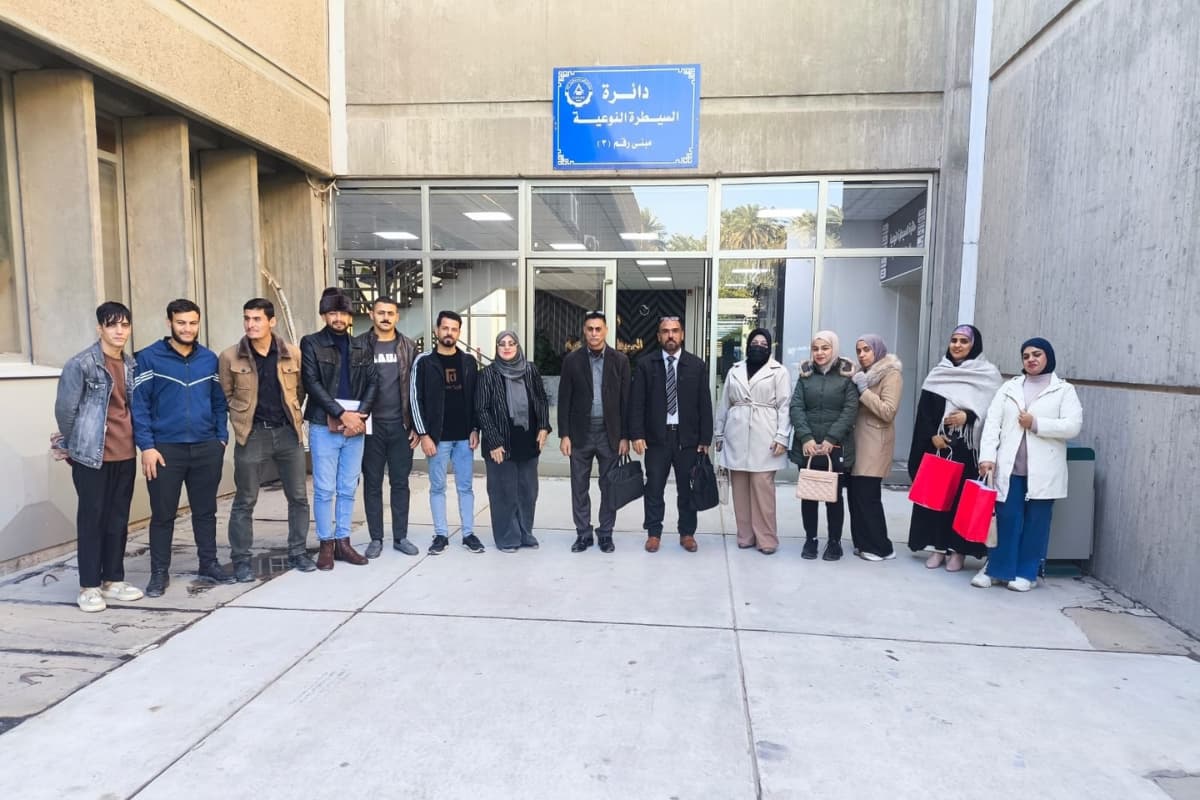
In line with the Sustainable Development Goals—particularly Quality Education—the Department of Field Crops organized a scientific visit for fourth-year students as part of the Forage Crop Production Technologies course to the Quality Control Laboratories. The visit aimed to strengthen practical skills and link theoretical concepts with hands-on laboratory applications.
The visit sought to familiarize students with the mechanisms used for testing and analyzing forage crops, as well as the most important accredited tests for quality evaluation, including physical and chemical analyses and their role in ensuring that feed meets standard specifications.
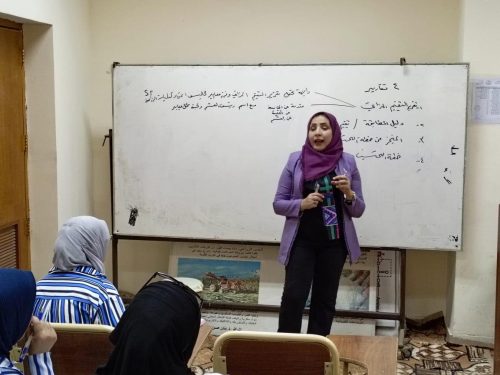
During the visit, students were introduced to modern laboratory equipment and internal laboratory workflows. They also received a detailed explanation from the specialized staff regarding quality control procedures and their importance in improving forage production efficiency and supporting the livestock sector.
This visit is part of a series of scientific activities that the department is keen to organize to enhance students’ scientific and practical competencies and prepare them for the labor market.