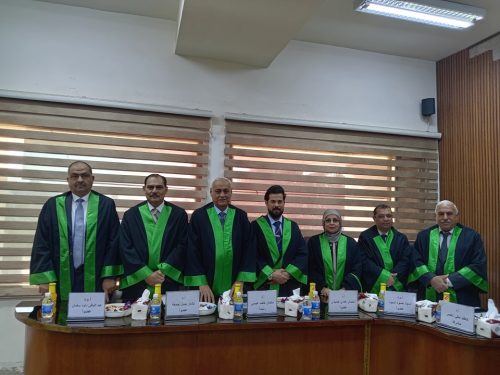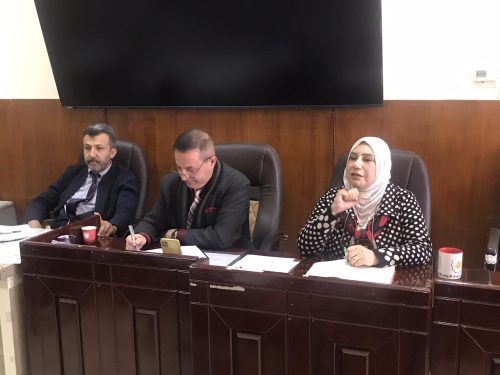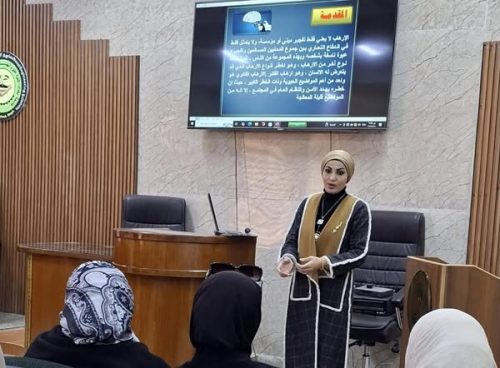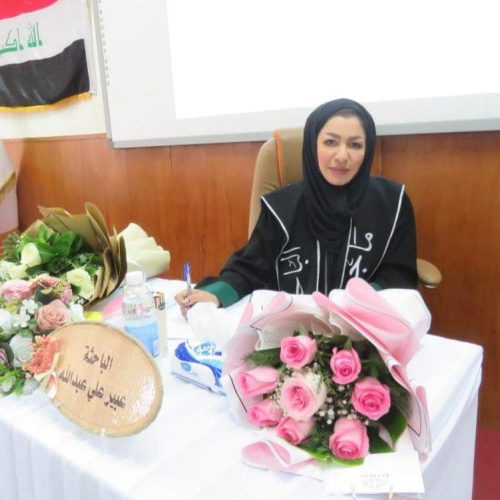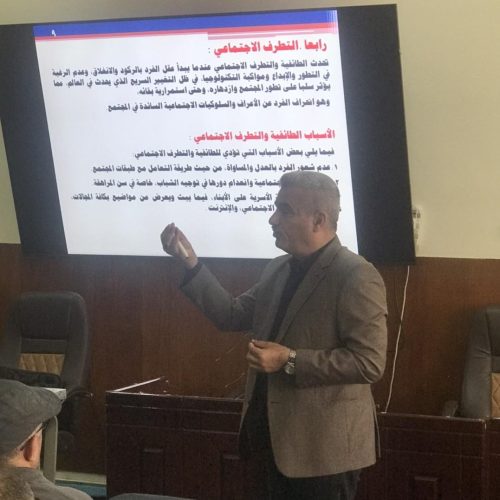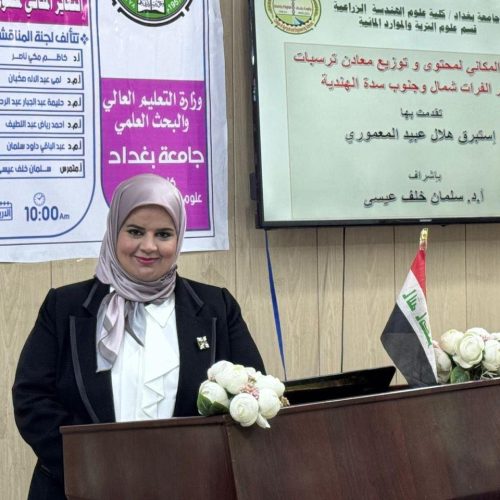
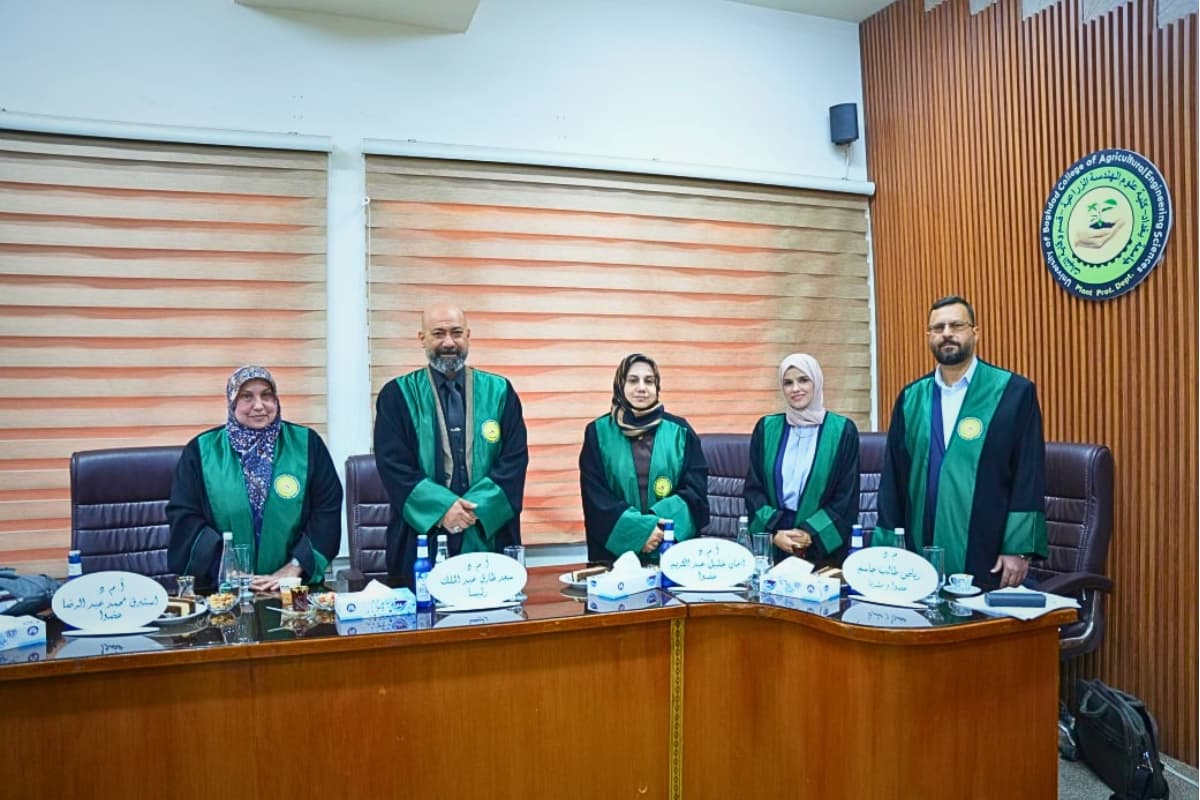
Zina Ahmed Khalaf from Department of Plant Protection successfully defended his Ph.D. work with the title “Study of the Geographical Distribution of Root-Knot Nematode Species in Some Tomato Fields, the Susceptibility of Certain Cultivars to Infection, and Their Control”.
The study aimed to determine the distribution and population density of root-knot nematode species in selected tomato fields, to classify these species morphologically and molecularly, and to evaluate the susceptibility of certain tomato cultivars to infection.
The researcher recommended expanding the use of molecular diagnostic techniques to achieve more accurate and rapid identification of root-knot nematode species compared to traditional morphological diagnosis. She also recommended conducting further studies on local and imported tomato cultivars to select those that are more resistant and better adapted to Iraq’s environmental conditions.

You May Also Like

College of Agricultural Engineering Sciences / Non-Curricular Activity

Visiting the Internal Sections of the Female Students’ Housing in Al Jadriyah Complex

The College of Agricultural Engineering Sciences Hosts a Workshop for the National Council for Accreditation of Agriculture Colleges Programs in Iraq

A Seminar discussed by the College of Agricultural Engineering Sciences

A Seminar discussed by the College of Agricultural Engineering Sciences

A Seminar discussed by the College of Agricultural Engineering Sciences

A Seminar discussed by the College of Agricultural Engineering Sciences

A Seminar discussed by the College of Agricultural Engineering Sciences

A Seminar discussed by the College of Agricultural Engineering Sciences

Defending a Master’s Thesis at the College of Agricultural Engineering Sciences on a Cooling System

Participation of the College of Agricultural Engineering Sciences in the International Scientific Conference on Soil and Water Assessment

A Seminar at the College of Agricultural Engineering Sciences on Sustainable Green Environment

Comments are disabled.