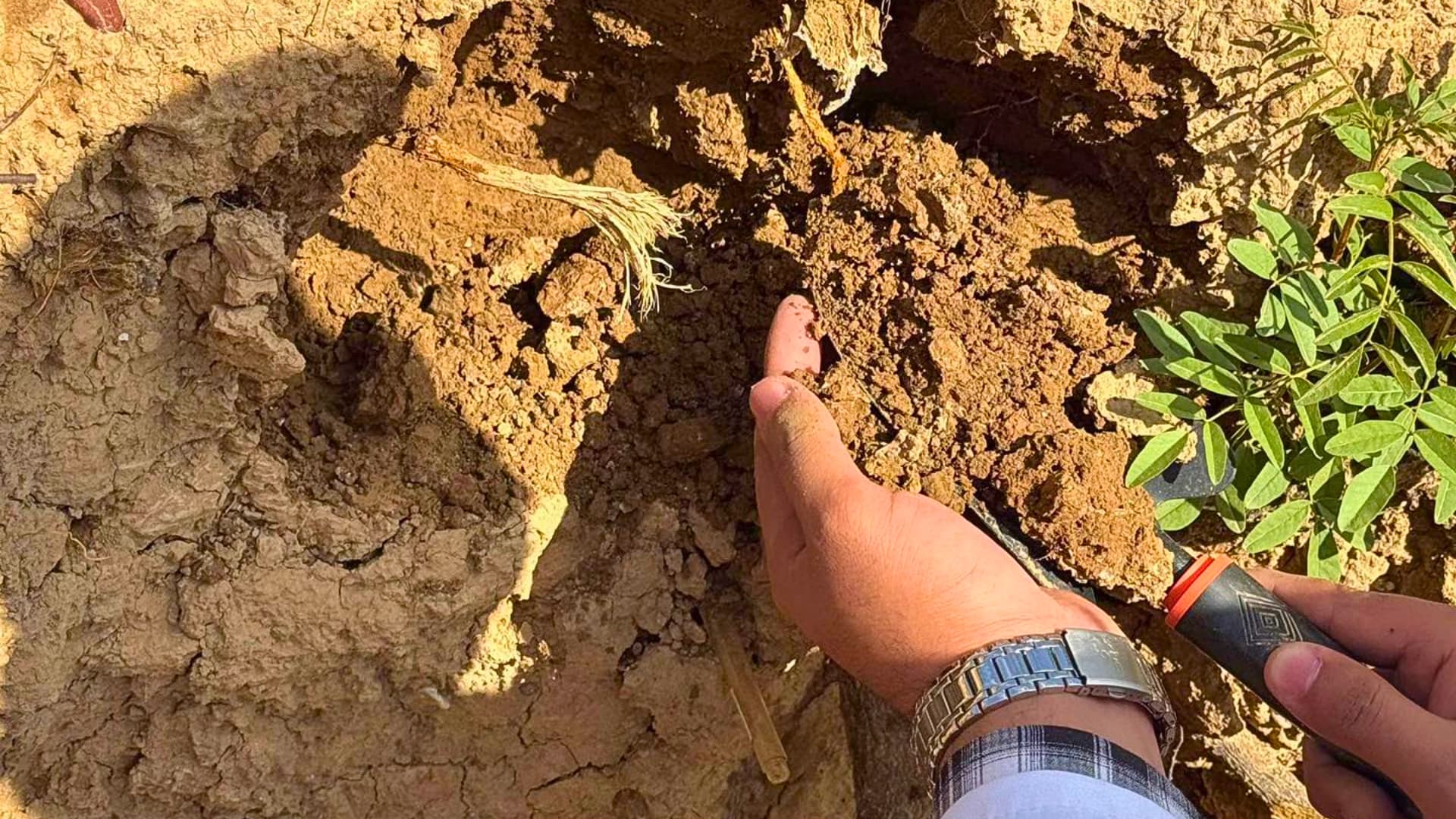
As part of the practical requirements of the Soil Mechanics course, the Department of Desertification Control organized a field-based practical lesson for fourth-year students, under the supervision of Dr. Hussein Abbas Mohammed and with the follow-up of Agricultural Engineer Sawsan Ahmed Mohammed.
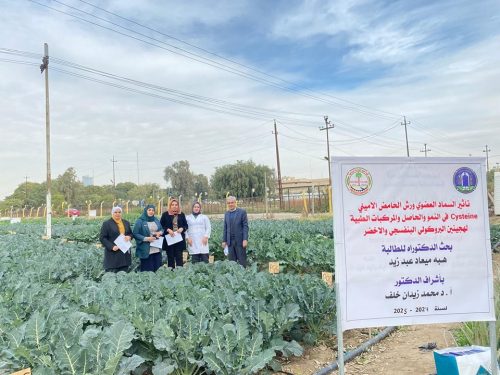
The activity featured a field visit during which students collected soil samples from different locations and depths using sampling containers. The collected samples were later used to perform grain size analysis tests for both coarse-grained and fine-grained soils, enabling students to determine particle-size distribution and gain a deeper understanding of the soils’ physical properties.
The practical session also included conducting the Standard Proctor Compaction Test and the Modified Proctor Compaction Test, along with plotting compaction curves and saturation lines. In addition, students carried out field descriptions of the soil samples, helping them strengthen their practical abilities in the identification, diagnosis, and classification of soils under field conditions.
This educational activity is part of the department’s ongoing commitment to integrating theoretical instruction with practical field applications. It plays an important role in developing students’ technical and analytical competencies in both laboratory and field-based soil investigations, thereby preparing them to address challenges related to soil degradation and desertification through scientifically grounded approaches.
The activity also reflects the department’s contribution to the United Nations Sustainable Development Goals (SDGs), particularly Goal 4: Quality Education, by promoting experiential learning and strengthening students’ applied skills, and Goal 15: Life on Land, by supporting scientific and educational efforts aimed at soil conservation, reducing land degradation, and combating desertification.