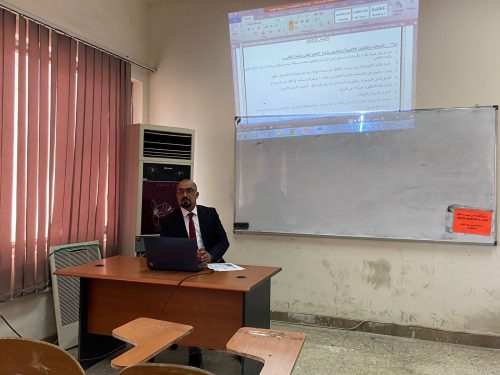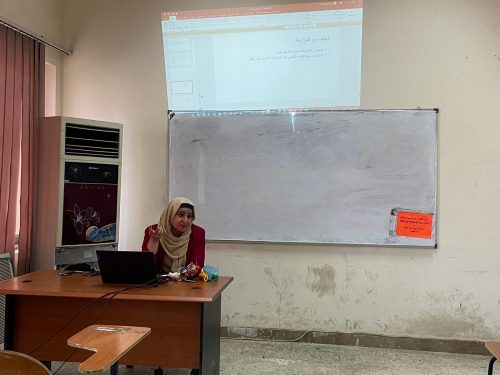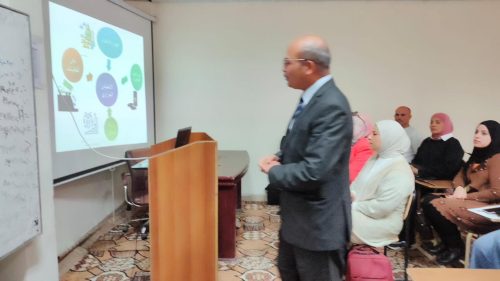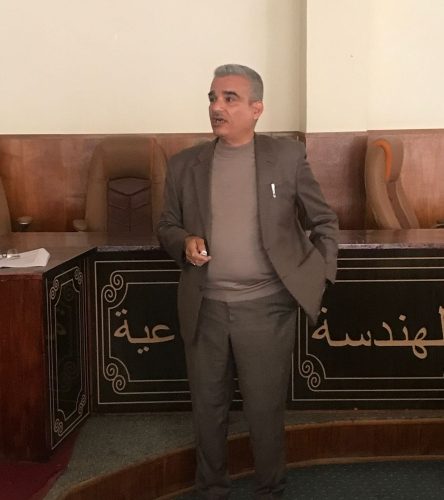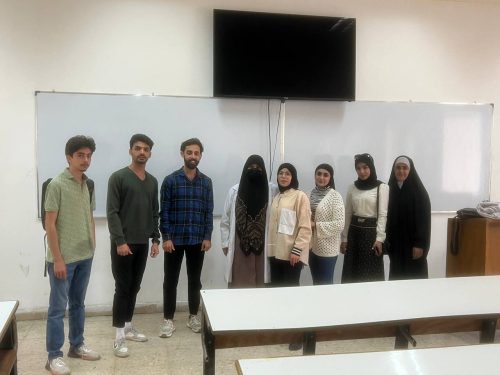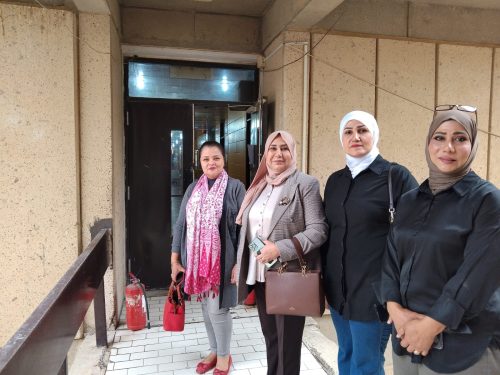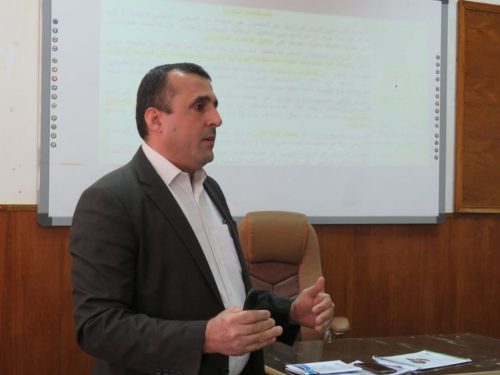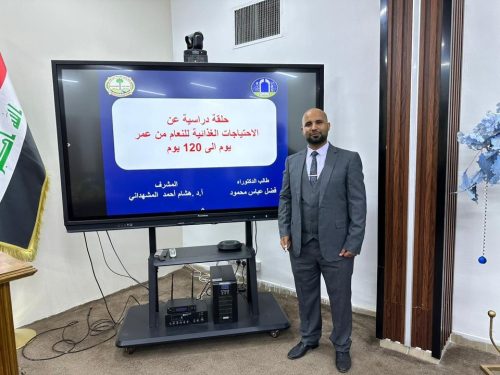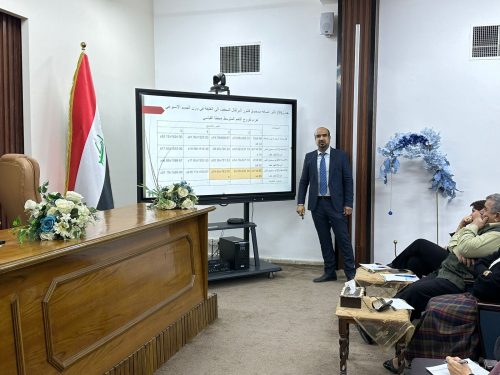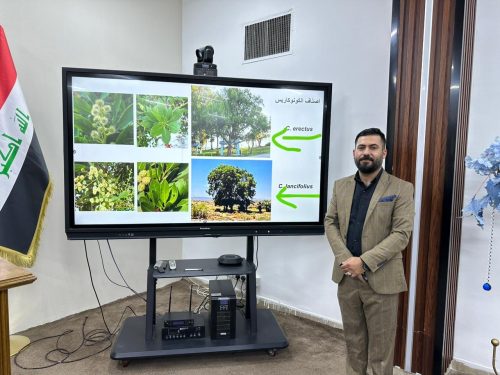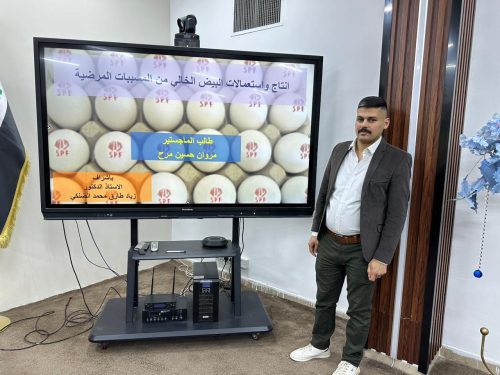
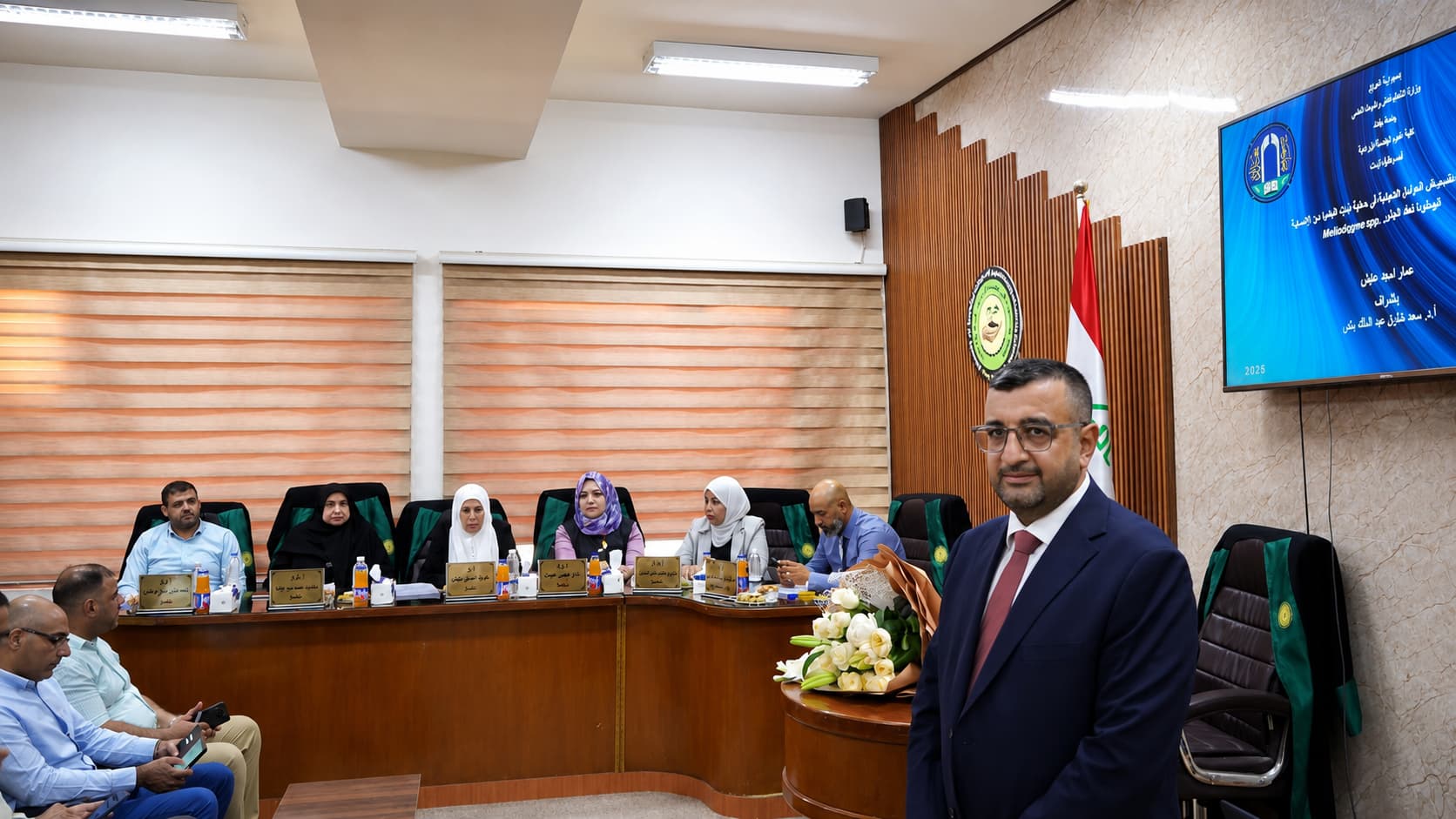
The College of Agricultural Engineering Sciences at the University of Baghdad witnessed the defense of a PhD dissertation entitled “Evaluation of the Efficiency of Certain Biological Agents in Protecting Okra Plants from Root-Knot Nematode (Meloidogyne spp.) Infection”, presented by Ammar Amjad Ayish from the Department of Plant Protection.
The dissertation aimed to identify alternative approaches to chemical pesticides for the management of root-knot nematodes (Meloidogyne spp.) affecting okra plants.
The researcher recommended conducting comprehensive surveys of additional okra fields to determine the distribution and economic impact of root-knot nematodes. He also recommended isolating and evaluating new indigenous microbial species from the Iraqi environment and investigating their efficacy against root-knot nematodes, given their potential effectiveness in suppressing associated plant pathogens.
Congratulations to the researcher on this academic achievement.
__________________________________________
 

You May Also Like

A Training Course on the Basics of Writing Social Research Using Computer Programs

A Workshop Discussed by the College of Agricultural Engineering Sciences

A Seminar Discussed by the College of Agricultural Engineering Sciences

A Scientific Workshop on Sustainable Agriculture Organized by the College of Agricultural Engineering Sciences

A Workshop on Hatred and Extremism: Its Causes and Impact Organized by the College of Agricultural Engineering Sciences

College of Agricultural Engineering Sciences / Non-Curricular Activity

Visiting the Internal Sections of the Female Students’ Housing in Al Jadriyah Complex

The College of Agricultural Engineering Sciences Hosts a Workshop for the National Council for Accreditation of Agriculture Colleges Programs in Iraq

A Seminar discussed by the College of Agricultural Engineering Sciences

A Seminar discussed by the College of Agricultural Engineering Sciences

A Seminar discussed by the College of Agricultural Engineering Sciences

A Seminar discussed by the College of Agricultural Engineering Sciences

Comments are disabled.