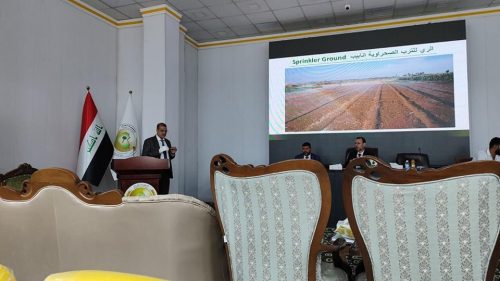
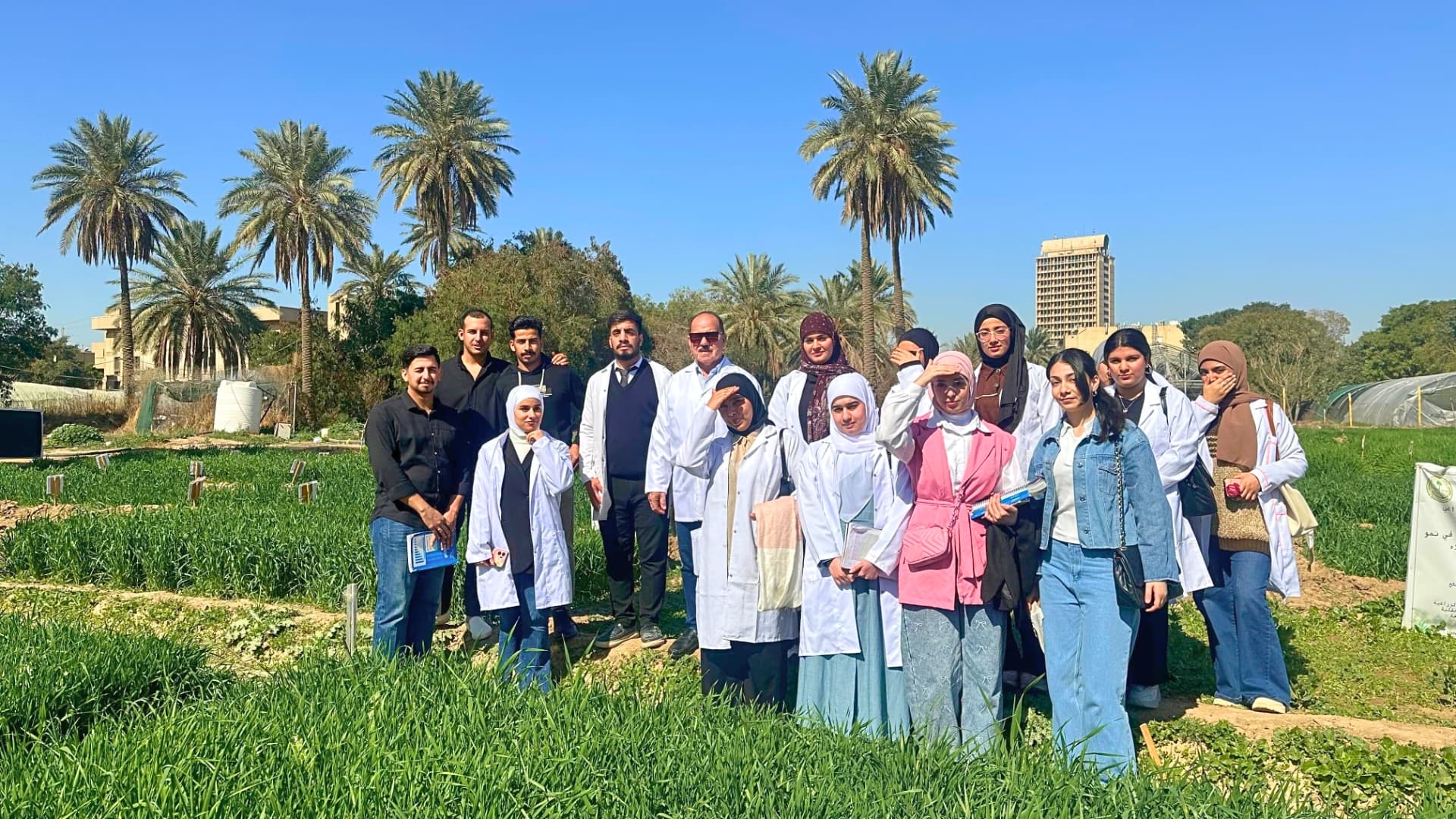
In alignment with the Sustainable Development Goals—Quality Education—a field visit was organized for second-year students from the Department of Agricultural Economics at the College of Agricultural Engineering Sciences, University of Baghdad. The visit was conducted as part of the practical component of the Field Crop Production Technology course under the supervision of Dr. Nafea Dhahi.

The visit included an introduction to several field crops cultivated within experimental trials carried out by fourth-year undergraduate students and graduate students in the Department of Field Crops.

This activity forms part of the department’s practical program, which aims to strengthen students’ applied skills and connect theoretical knowledge with hands-on field experience, thereby enhancing their scientific and professional competencies in field crop production.
You May Also Like

A Workshop on University Curricula and their Importance in Shaping and Developing Leadership Skills was Organized by the College of Agricultural Engineering Sciences

Rehabilitation Campaign in the Department of Animal Production

A Seminar Organized by the College of Agricultural Engineering Sciences.

Participation of the College of Agricultural Engineering Sciences in the Activities of the Arabic Calligraphy and Decoration Exhibition

University of Baghdad Achieves Top Spot Locally and 21st Regionally in Arab University Rankings 2023

Field Visit for Fourth-Year Students’ Experiments

The Relationship Between Agricultural and Commercial Development: A Doctoral Dissertation Defended at the College of Agricultural Engineering Sciences

PhD Dissertation on the Antibacterial Properties of Certain Foods was Defended at the College of Agricultural Engineering Sciences

A Workshop on the Scourge of Drugs Organized by the College of Agricultural Engineering Sciences

Within the Requirements of Practical Courses

Application of Courses Practically and in the Fields of the College of Agricultural Engineering Sciences

Application of Courses Practically and in the Fields of the College of Agricultural Engineering Sciences

Comments are disabled.