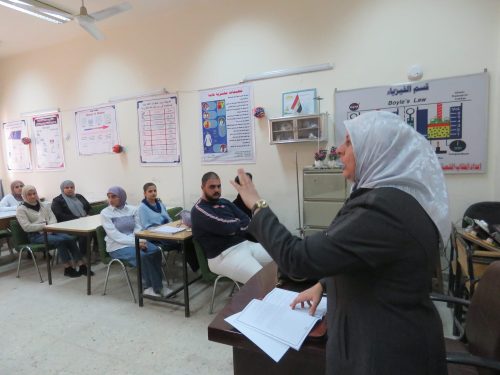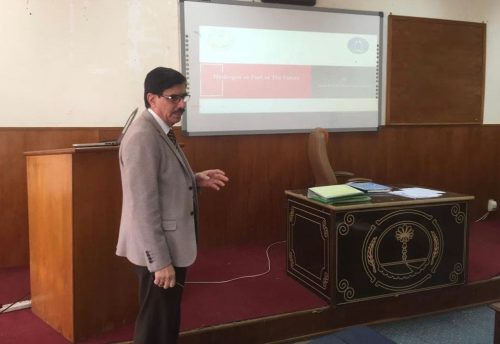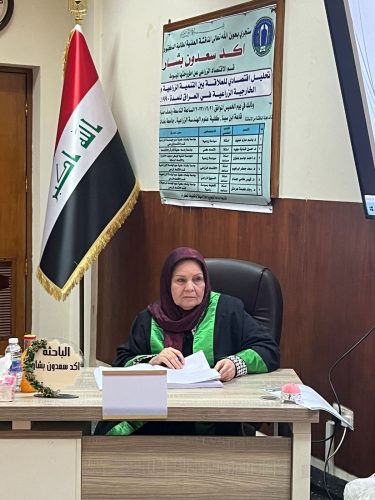
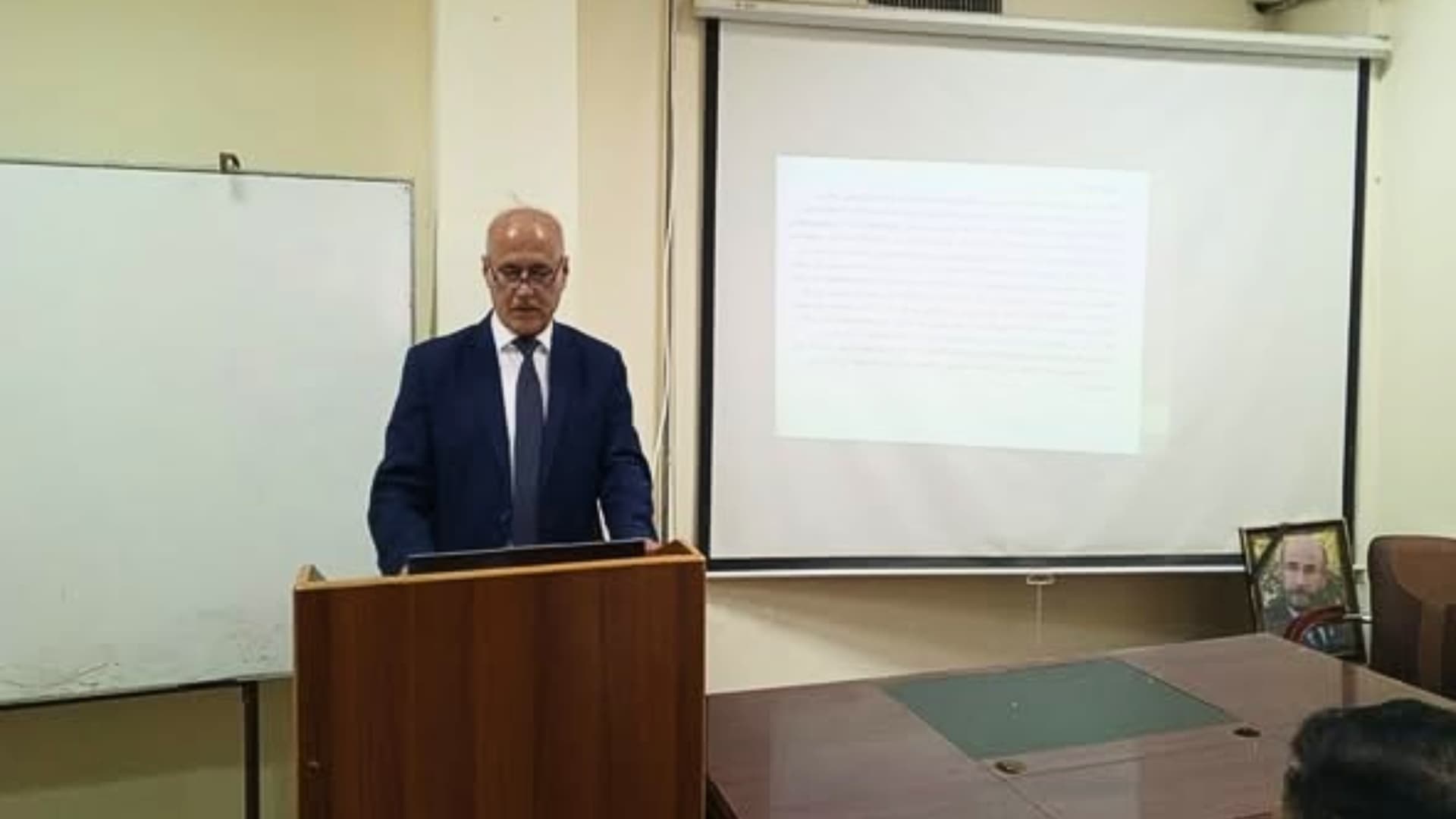
A scientific workshop titled “Basmati Rice (Nasmato Rices)” was organized by the Department of Field Crops, College of Agricultural Engineering Sciences, at the University of Baghdad. The workshop was presented by Dr. Saad Faleh Hassan from the Agricultural Research Department of the Ministry of Agriculture (Iraq).
The workshop addressed the history and geographic distribution of basmati rice genetic varieties, as well as the fundamental criteria that characterize a genotype as belonging to the basmati group. It also reviewed the most important basmati rice varieties in the world and their traditional classification, in addition to the isozymes basis for classification. The presentation discussed aroma inheritance and other qualitative traits such as grain length, width, and the ratio of length to width before and after milling and cooking, amylose content, consumer preference, as well as field performance and grain yield.
The workshop recommended expanding basmati rice cultivation in suitable areas with appropriate soil and water conditions, particularly in the Middle Euphrates region, due to its high economic value and strong demand in local and international markets. It also emphasized conducting research programs to improve varieties and develop basmati strains that are tolerant to salinity and water scarcity in line with Iraq’s environmental conditions. Additionally, the workshop highlighted the importance of applying modern irrigation techniques and integrated water management systems, such as Alternate Wetting and Drying (AWD), to reduce water consumption while maintaining productivity. It further recommended supporting farmers through training and agricultural extension programs on best practices in basmati rice cultivation, including optimal planting dates, plant density, fertilization, and pest management, to enhance production and grain quality.